Homework 1
BECO 3310 | Part 1: Foundations of Economics
Homework 1 of 3
Area calculation formulas:
- ½ × base × height for triangles
- length × width for rectangles
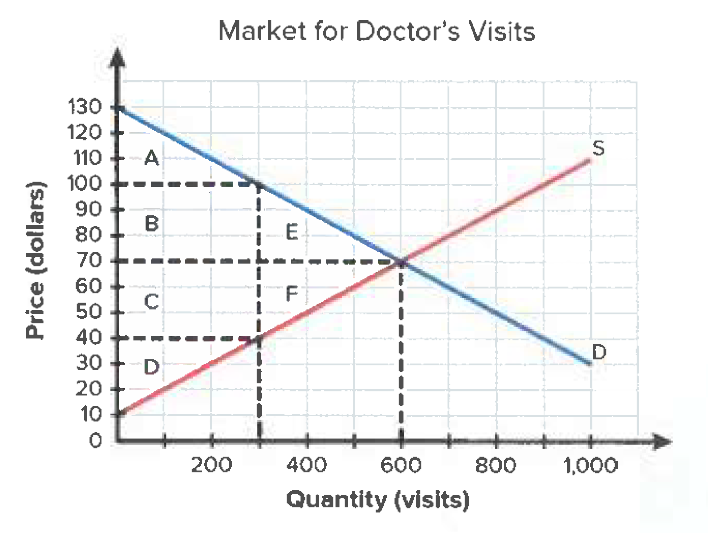
Figure 1
1. Refer to Figure 1 above: List and calculate the consumer surplus & producer surplus in the market for doctor's visits when in competitive equilibrium, using the letters provided in the triangles & rectangles.
2. Refer to Figure 1 above: Suppose the government limits the amount of doctor's visits to be made to 300. Label the consumer surplus, producer surplus, & deadweight loss, using the letters provided in the triangles & rectangles. Calculate the area of each.
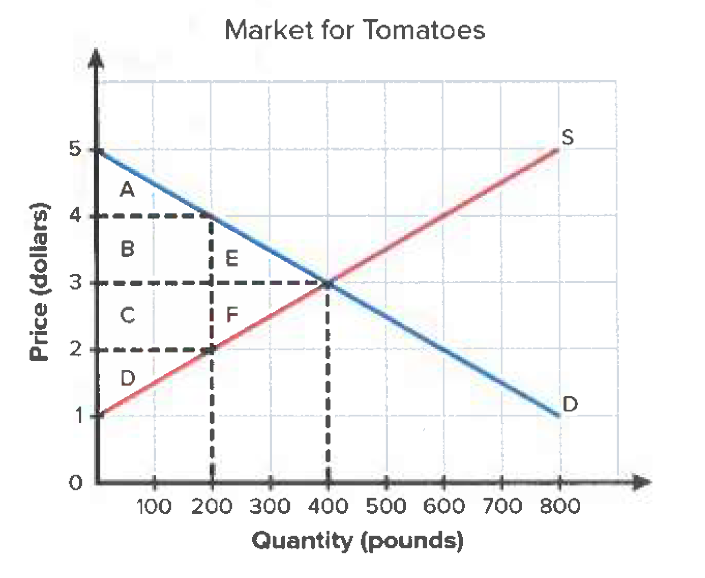
Figure 2
3. Refer to Figure 2 above: List and calculate the consumer surplus & producer surplus in the market for tomatoes when in competitive equilibrium, using the letters provided in the triangles & rectangles.
4. Refer to Figure 2 above: Suppose the government imposes a price floor of $4 in the market for tomatoes. Label the consumer surplus, producer surplus, & deadweight loss, using the letters provided in the triangles & rectangles. Calculate the area of each.
5. Explain what will happen to the equilibrium price, quantity, and economic welfare (consumer & producer surplus) if the price floor is non-binding.
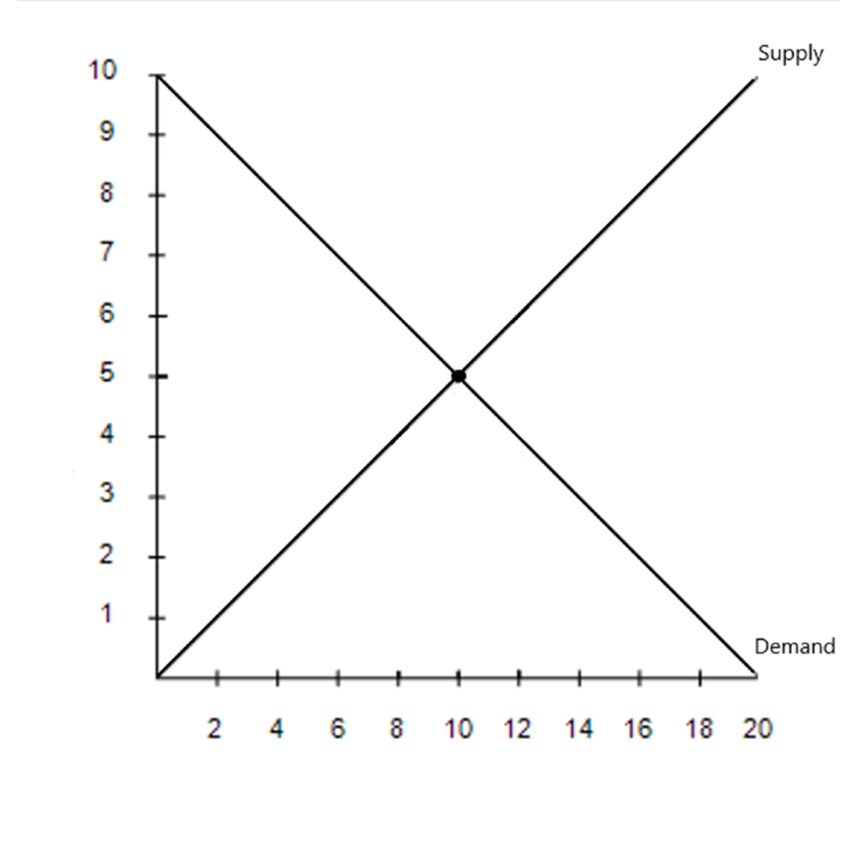
Figure 3
6. Use the graph above to do the following: Explain what would happen to price and quantity if the following circumstances happened:
- Demand increases
- Supply increases
- Demand and supply increase
- Demand decreases while supply increases
- Supply decreases while demand increases a little bit
7. Elasticity: Answer the following questions
- A 10% increase in the price of movie tickets causes the quantity demanded to fall by 25%. Is the demand elastic or inelastic?
- The price of salt rises by 20%, but the quantity demanded only falls by 1%. Is the demand elastic or inelastic?
- A 5% increase in the price of coffee leads to a 15% increase in the quantity supplied. Is the supply elastic or inelastic?
- When consumer income increases by 10%, the demand for instant noodles falls by 8%. Is this good normal, inferior, or a luxury?
- When income rises by 15%, the demand for international vacations rises by 30%. Is this good normal, inferior, or a luxury?
- The price of Coca-Cola increases, and as a result, the demand for Pepsi rises. Are Coca-Cola and Pepsi substitutes or complements?
- The price of smartphones decreases, and the demand for phone cases increases. Are smartphones and phone cases substitutes or complements?
8. Using what you've learned from the reading "I, Pencil," explain:
- How does "I, Pencil" illustrate the idea that no single person knows how to make something as simple as a pencil? What does this reveal about the role of specialized knowledge in economics?
- What role does the "invisible hand" play in coordinating all the people and resources involved in making a pencil, even though none of them intend to make a pencil specifically?
- The essay highlights materials from around the world (cedar, graphite, rubber, etc.). How does "I, Pencil" help us understand the importance of global trade and interdependence in modern economies?